
Inside UpTrader at IFX Expo Dubai 2026: Event Highlights, Meetings & Industry Conversations
Share this publication:
UpTrader at IFX Expo Dubai: A Look from the Inside
Some events you attend. Others, you show up to knowing they matter. IFX Expo Dubai 2026 fell firmly in the second category, and for the UpTrader team, those two days were anything but quiet. Between back-to-back meetings, product walkthroughs, and the kind of corridor conversations that actually move things forward, the expo delivered what it promised: a concentrated look at where the brokerage world is heading and who is doing serious work to get there.
Dubai has become a reliable checkpoint for the global forex and fintech industry. The crowd it draws is not just large, it is specific. Operators, compliance teams, heads of technology, founders building from scratch and executives scaling established books all move through the same floor. That mix of seniority and intent is what makes it worth the trip, and this year the density of meaningful interaction was higher than most.
What follows is a behind-the-scenes account of how those days unfolded for UpTrader. Not a polished press summary, but an honest look at what we saw, heard, and came away thinking about.
Where Conversations Turned into Opportunities
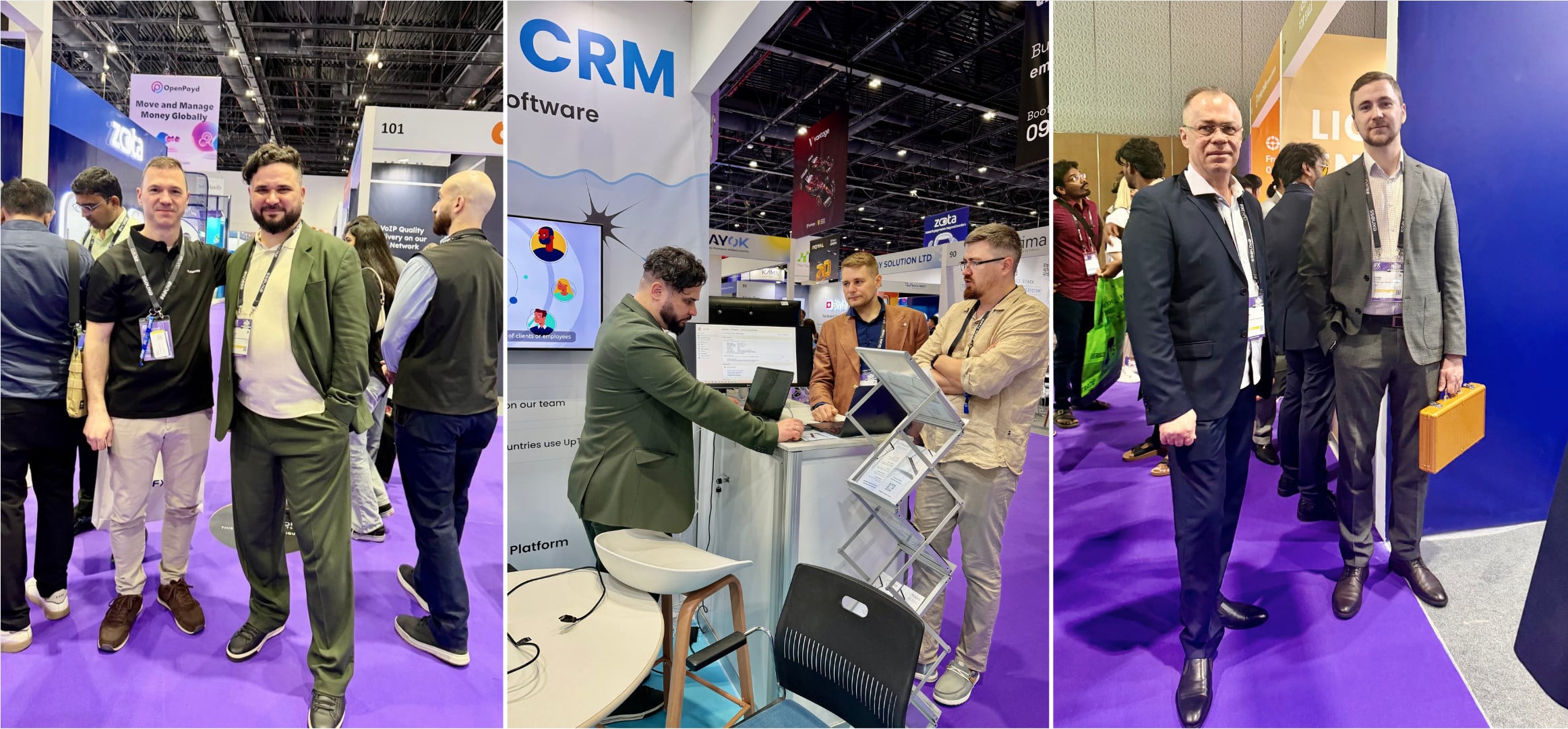
The booth setup was deliberate. We positioned it to invite conversation rather than broadcast, favoring open sight lines over enclosed demo stations. Visitors could walk in, look around, and engage on their own terms. That mattered because the people who stopped were rarely browsing. They had specific questions and, in most cases, a specific problem sitting somewhere in their operation.
Traffic was consistent across both days with a clear pattern emerging early. The first wave each morning tended to be partnerships and business development people doing initial reconnaissance. By midday, the conversations shifted to product and operations. Brokers sent their technical contacts, prop firms brought in their platform managers, and institutional partners came with prepared questions. By the afternoon sessions it was mostly decision-makers running their own follow-up laps.
What drew attention most visibly was the interface. Several visitors commented on the cleanliness of the Forex CRM layout before asking about features. That reaction is not accidental. UpTrader has invested heavily in making complexity feel manageable at the product level, and when you put it in front of someone who has spent years dealing with cluttered legacy platforms, the contrast is obvious within the first few minutes of a demo.
What Brokers and Prop Firms Wanted to See
The product conversations were grounded in operational reality, not feature checklists. The forex CRM drew consistent attention, but the questions went well beyond surface-level capabilities. Visitors wanted to understand how client data flows through the system, how onboarding stages are configured, and how reporting surfaces across different user roles. These are the questions of people who have been burned before by platforms that looked complete on paper and fell apart at the implementation stage.
Back office automation was another recurring focus. Several brokers described workflows that still depend on manual reconciliation and end-of-day exports to spreadsheets. The interest in eliminating that overhead was genuine and, in some cases, urgent. One compliance-focused contact walked through a specific reporting scenario they needed to automate and spent close to forty minutes mapping it through the UpTrader back office framework before they were satisfied it could handle the volume and structure their business required.
Prop trading infrastructure attracted its own audience. The growth of prop firms in the region has been significant, and a portion of them are now hitting the ceiling of the tools they launched with. The conversations here centered on challenge management, account configuration at scale, and payout logic. These are not simple requirements, and the operators who raised them were clearly past the stage of looking for off-the-shelf answers. They wanted to understand the architecture before committing to anything.
Real Conversations with Decision-Makers
Beyond the booth, the scheduled meetings were where things got substantive. The range of companies represented was broad, from regulated retail brokers with tens of thousands of active clients to smaller prop operations that launched within the last eighteen months and are now looking to rebuild on more serious infrastructure.
Pain points surfaced repeatedly in similar forms regardless of company size. Fragmentation was the most common thread. Businesses running three or four separate tools to manage what should be a single client lifecycle described the inefficiency in terms of cost, errors, and staff overhead. The frustration was not with any one platform but with the accumulation of partial solutions that never quite fit together.
A number of meetings centered on 2026 planning cycles. Firms that had been evaluating infrastructure changes for months were using the expo as a point to accelerate those conversations. They came in with clear criteria: reliability, local support responsiveness, integration depth, and a realistic implementation timeline. What they wanted most was a provider they could rely on at the operational level, not just at the sales level.
What the Market Is Actually Asking For
Step back from the individual conversations and a few consistent signals become visible across the floor. The demand for consolidated, all-in-one systems was the most prominent. Brokers are tired of managing integrations between platforms that were never designed to work together. They are looking for a single environment that covers CRM, back office, client portal, and reporting without requiring a custom development project just to make it functional.
Automation was not a nice-to-have in most of these conversations. It was the central requirement. The firms showing the most operational maturity were already thinking about where human review adds value and where it simply adds delay. They want their platforms to handle the routine work, surface the exceptions, and leave their teams room to focus on client relationships and growth.
There was also a notable shift in how operators talk about technology priorities. The focus has moved away from trading conditions and execution speeds as primary differentiators toward operational efficiency and client experience infrastructure. Firms that get their back-end in order are building competitive advantages that are harder to replicate than tighter spreads. That shift in perspective was evident across conversations with brokers, prop firms, and institutional contacts alike.
The People Behind UpTrader on the Ground
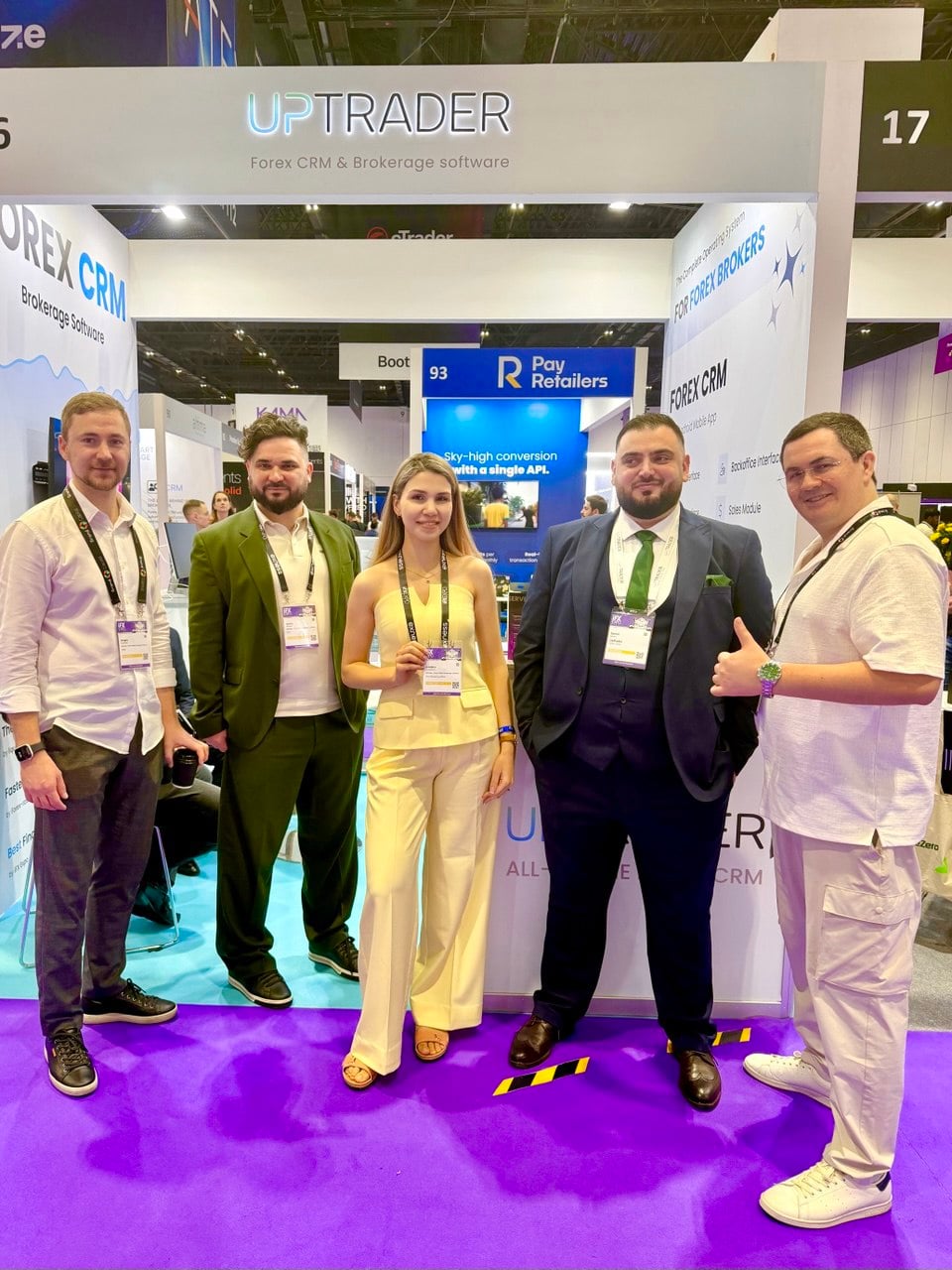
None of this happens without the team that shows up and stays present through two full days of continuous engagement. The UpTrader delegation brought a mix of product knowledge, technical depth, and genuine curiosity about the problems visitors were describing. That combination is what makes the difference between a booth that collects business cards and one that builds relationships.
Energy held up well given the pace. The team moved between formal meetings and open floor conversations without dropping the quality of attention in either setting. There were moments, particularly in the late afternoon sessions, where several threads were running in parallel: one conversation going deep on technical integration, another focused on pricing and implementation timelines, and someone else at the edge of the booth answering preliminary questions from a new contact who had just stopped to look at the screen. Managing that kind of simultaneous engagement is a real skill and the team handled it well.
The networking extended beyond the booth floor. Evening sessions and side meetings added further depth to relationships that had started during the day. Some of the most productive exchanges happened in those settings, where the structure of the expo loosened and people spoke more openly about what they were actually building and what was getting in their way.
From Dubai to What's Next
IFX Expo Dubai 2026 confirmed what we already suspected: the infrastructure conversation in brokerage is maturing quickly, and the firms that are moving with intention are pulling ahead of those still managing through patchwork systems. The appetite for serious tooling is there. The willingness to make decisions is there. What people are looking for is a partner who understands the operational reality behind the requirements and can deliver on it without a six-month runway just to get to basic functionality.
The conversations from Dubai do not end in Dubai. Follow-ups are already underway, and a number of the meetings from the floor are progressing into detailed scoping discussions. The pipeline that came out of those two days reflects real interest from real operators who have done their research and are ready to move.
If you were at the expo and did not get a chance to connect, or if you were following from a distance and want to explore what UpTrader can do for your operation, the conversation is open.
Reach out to the team or book a demo directly and we will pick up exactly where those Dubai conversations left off.